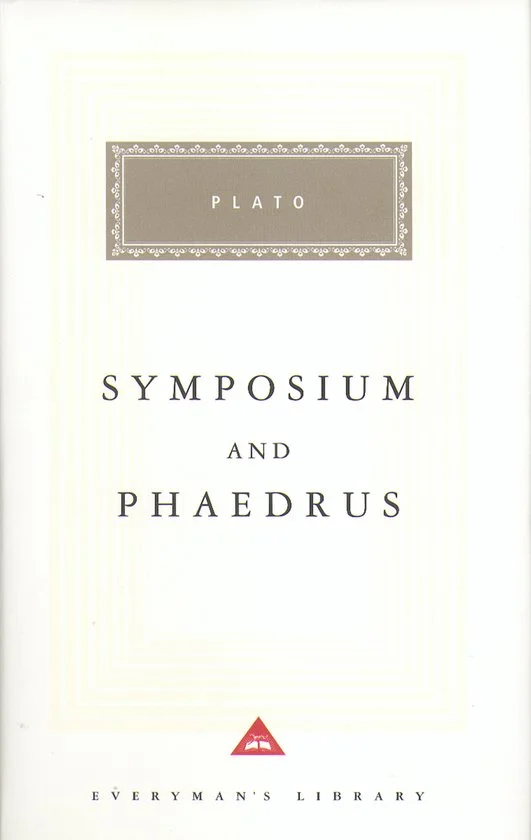
Symposium

Oorspronkelijke prijs was: 25.99 €.Huidige prijs is: 7.80 €.

It has been said that, after the Bible, Plato’s dialogues are the most influential books in Western culture. In both dialogues, Socrates plays the leading role, by turns teasing, arguing, analyzing, joking, inspiring, and cajoling his followers into understanding ideas that have remained central to Western thought through the centuries. It has been said that,…

Ga naar de kassa
SKU: 141bol1785869356
Category: ,

Beschrijving

It has been said that, after the Bible, Plato’s dialogues are the most influential books in Western culture. In both dialogues, Socrates plays the leading role, by turns teasing, arguing, analyzing, joking, inspiring, and cajoling his followers into understanding ideas that have remained central to Western thought through the centuries.

It has been said that, after the Bible, Plato’s dialogues are the most influential books in Western culture. And of the dialogues, the Symposium is the most delightful and accessible, requiring no special knowledge of ancient Greek philosophy or customs. Dramatizing a party in fifth-century B.C. Athens, the deceptively unassuming Symposium introduces–in the guise of convivial after-dinner conversation–profound ideas about the nature of love. In Phaedrus, here published together with the Symposium, Plato discusses the place of eloquence in expounding truth. In both dialogues, Socrates plays the leading role, by turns teasing, arguing, analyzing, joking, inspiring, and cajoling his followers into understanding ideas that have remained central to Western thought through the centuries.

Beschrijving

Plato 424/423 BC[a] – 348/347 BC), was a Classical Greek philosopher, mathematician, student of Socrates, writer of philosophical dialogues, and founder of the Academy in Athens, the first institution of higher learning in the Western world. Along with his mentor, Socrates, and his student, Aristotle, Plato helped to lay the foundations of Western philosophy and science-wikipedia

Beschrijving

The Symposium is a philosophical text by Plato dated c. 385–380 BC. It concerns itself at one level with the genesis, purpose and nature of love, and (in later day interpretations) is the origin of the concept of Platonic love.

Love is examined in a sequence of speeches by men attending a symposium, or drinking party. Each man must deliver an encomium, a speech in praise of Love (Eros). The party takes place at the house of the tragedian Agathon in Athens. Socrates in his speech asserts that the highest purpose of love is to become a philosopher or, literally, a lover of wisdom. The dialogue has been used as a source by social historians seeking to throw light on life in ancient Athens, in particular upon sexual behavior, and the symposium as an institution.